Welcome to Senator Robert Peters' legislative website
Peters to host Mobile DMV event on Chicago’s South Side
- Details
- Category: News
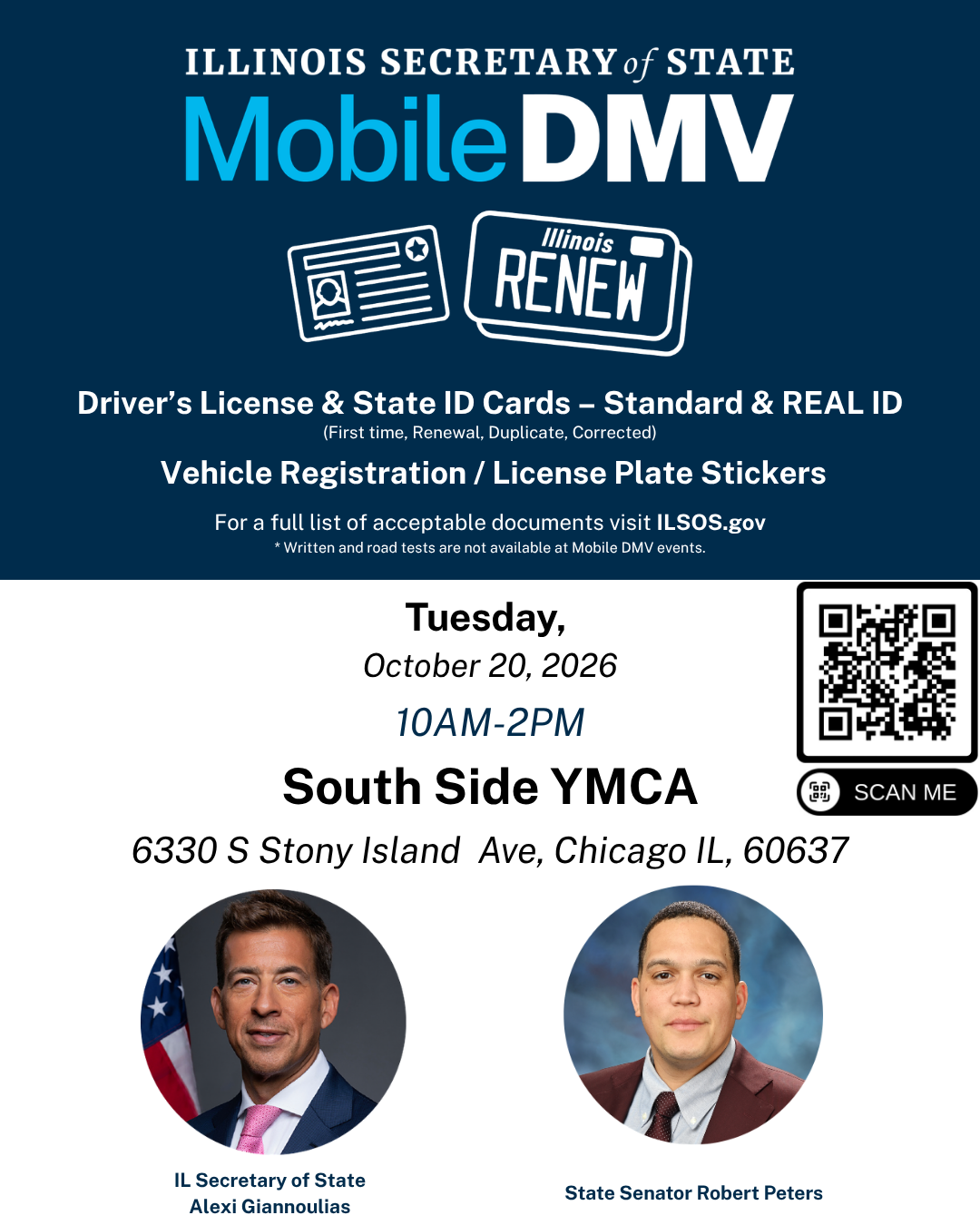 CHICAGO — To provide Chicago drivers with a convenient opportunity to access Illinois Secretary of State driver services, State Senator Robert Peters and Secretary Alexi Giannoulias are partnering to host a Mobile DMV event on Chicago’s South Side.
“By offering 13th District residents essential driver services directly on the South Side, we’re taking intentional steps to bridge the gap for residents who may otherwise struggle to find adequate transportation or time to visit a brick-and-mortar location,” said Peters (D-Chicago). “I encourage all drivers in need to take advantage of this opportunity by reserving their spot today.”
The event will be held on Tuesday, Oct. 20 from 10 a.m. to 2 p.m. at the South Side YMCA, located at 6330 S. Stony Island Ave. in Chicago. Provided by the ILSOS office, on-site Mobile DMV services will include license and ID renewals, license plate sticker purchasing and more. Written and road tests are not available at Mobile DMV events.
Registration is required. Drivers can make a Mobile DMV appointment here. With questions, contact Peters’ office at 773-363-1996.
Peters announces funding to boost tourism in 13th District
- Details
- Category: Press Releases
 CHICAGO — State Senator Robert Peters is announcing almost $300,000 is coming to the 13th District as part of an initiative to support tourism and attract visitors across the state.
“Tourism is a major economic driver for our state, especially the Chicagoland area where museums, events, attractions, fine dining and small businesses are abundant,” said Peters (D-Chicago). “I’m proud to see this funding coming to the 13th District to ensure visitors near and far are encouraged to experience our neighborhoods and the world-class destinations they offer.”
The Tourism Marketing Partnership Grant Program, administered by the Illinois Department of Commerce and Economic Opportunity, provides matching grants to assist in the promotion of tourism attractions, destinations and events in the state. Grant funding will help tourism partners market their attractions and events to increase visitation by both business and leisure travelers to increase overnight stays in Illinois.
Peters advises eligible residents to apply for energy bill assistance
- Details
- Category: Press Releases
CHICAGO – As energy costs rise and cold temperatures approach, State Senator Robert Peters encourages residents in the 13th District to apply for the Low-Income Energy Assistance Program.
“For families already balancing groceries, housing and other expenses, a higher energy bill can add a greater layer of financial stress,” said Peters (D-Chicago). “LIHEAP helps provide security to Illinois families who need additional support with their energy bills to ensure they have the basic needs to be comfortable in their homes, especially as we near the colder months.”
The LIHEAP program – which opens Oct. 1 – utilizes a priority application system to ensure that families most in need can apply first. All families who meet the qualifications and provide proper documentation will receive support until funding is exhausted. Families who earn up to two times the federal poverty level are eligible to receive support through LIHEAP. A chart with the eligible income thresholds can be found here.
In addition to LIHEAP, Illinois offers a number of other programs to support eligible low-income families with utility assistance. These programs include:
- One-Time Direct Vendor Payment: All LIHEAP recipients receive a one-time payment.
- Crisis/Reconnection Assistance: Funding is available for families in heating-related emergency situations.
- Furnace Assistance: Based on funding availability, Furnace Assistance may be provided to homeowners who do not have an operating furnace for their residence.
- Home Weatherization Program: The Illinois Home Weatherization Assistance Program (IHWAP) helps low-income residents and households conserve fuel and reduce energy costs by making their homes and apartments more energy efficient.
People can learn more and apply for these programs on the DCEO Website.
Peters encourages local organizations to apply for pre-apprenticeship funding
- Details
- Category: Press Releases
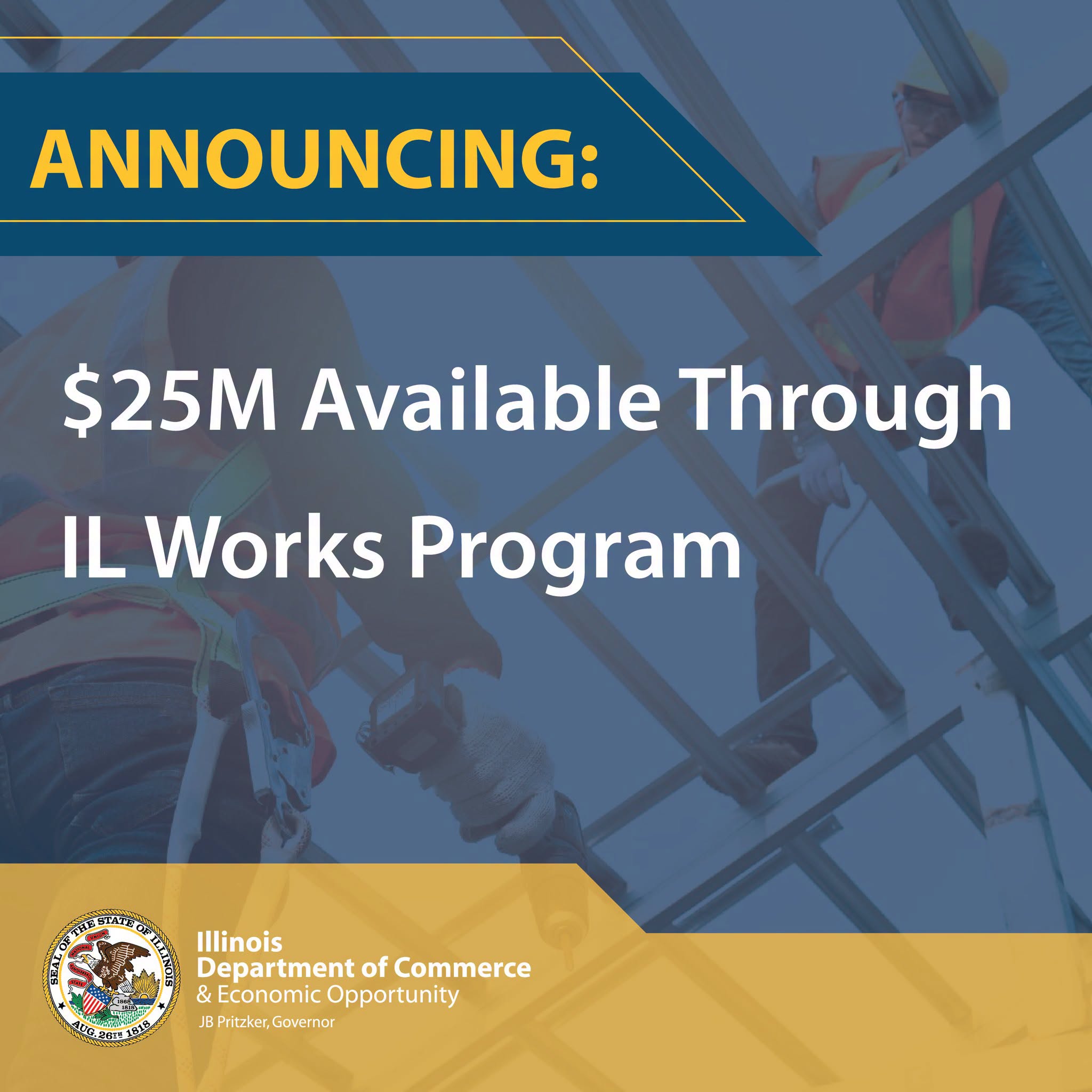 CHICAGO — To expand the 13th District's talent pipeline and boost diversity in Illinois’ construction and building trades, State Senator Robert Peters is encouraging local community-based organizations to apply for the latest round of funding through the Illinois Works Pre-Apprenticeship Program.
“I have been proud to be a steadfast advocate for the Illinois Works Pre-Apprenticeship Program since its inception, recognizing its importance for driving training and employment equity for minority groups in Illinois, and especially the Chicagoland area,” said Peters (D-Chicago), chair of the Senate Labor Committee. “By ensuring we’re prioritizing diversity in the construction industry and building trades, we are solidifying our state as one of the best for fostering long-term career success.”
The Illinois Works Pre-Apprenticeship Program launched in 2021 through the Illinois Department of Commerce and Economic Opportunity with the goal of increasing access to apprenticeship programs to a more diverse pool of candidates. These comprehensive pre-apprenticeship programs help participants gain admission to apprenticeship programs, which provide graduates a greater opportunity to start a long-term career in the trades. Since the program’s inception, Illinois Works has awarded over $70 million to community-based organizations serving over 7,000 Illinois residents.
More Articles …
Page 1 of 101

Welcome
Dear Friends,
Thank you for visiting my legislative website. It is my honor to serve the citizens of the 13th Senate District in the Illinois General Assembly. On this website, you can learn a little bit about me, my record in the General Assembly, and the services I can provide you.
I always welcome feedback from my constituents, so if you have any questions, concerns, or ideas, please do not hesitate to contact me.
Sincerely,

Robert Peters
State Senator, 13th District
Follow Sen. Peters


Contact Us
District Office:
1304 E. 47th St., Suite 205
Chicago, IL 60653
(773) 363-1996
Text:
(773) 830-2598
Springfield Office:
635 Capitol Building
Springfield, IL 62706
(217) 782-5338